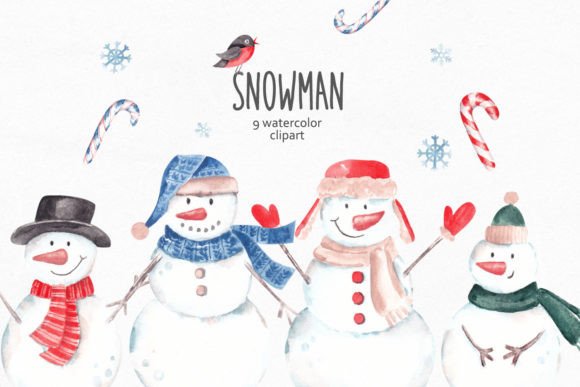
Review: Watercolor Christmas Snowman Clipart for Embroidery
As a designer who spends more time staring at stitch maps than holiday movies, I approach seasonal assets with a critical eye. We all want that perfect holiday embroidery look, but not every graphic translates well to thread. When I first opened the Watercolor Christmas Snowman Clipart, my immediate reaction wasn't just about the cuteness factor; it was about feasibility. How does this soft, painterly aesthetic hold up when converted into a machine embroidery design? Does it lose its charm in translation, or does it become a standout piece for a handmade product? After mentally walking through several production scenarios, here is my practical assessment of using these Illustrations for real-world projects.
The Aesthetic Challenge: Soft Edges vs. Stitch Definition
The primary appeal of the Watercolor Christmas Snowman Clipart lies in its fluidity. Unlike vector art with hard, crisp lines, watercolor styles rely on bleeding colors and soft gradients. For an embroiderer, this presents a unique challenge. If you are digitizing this yourself or buying a pre-made embroidery file, you have to decide how to interpret those soft edges. Are we looking at a satin stitch border to define the shape, or a fill stitch that mimics the paint wash?
In my experience, this design shines best when the digitizer respects the original mood. If the stitch density is too high, you lose the airy, whimsical feel and end up with a solid block of thread that looks heavy on the fabric. Conversely, if the density is too low, the underlying fabric shows through in a way that looks like a mistake rather than a style choice. The visual personality of this snowman suggests warmth and nostalgia, making it ideal for projects where a "soft touch" is desired over industrial precision.
Real-World Application: The Holiday Tote Bag Scenario
Let's put this into a concrete scenario. Imagine a client orders a batch of canvas tote bag design units for a boutique holiday market. They want something festive but not cliché. The Watercolor Christmas Snowman Clipart fits this brief perfectly. Canvas has enough texture to support the design without swallowing the details, and the neutral background of the bag allows the watercolor hues to pop.
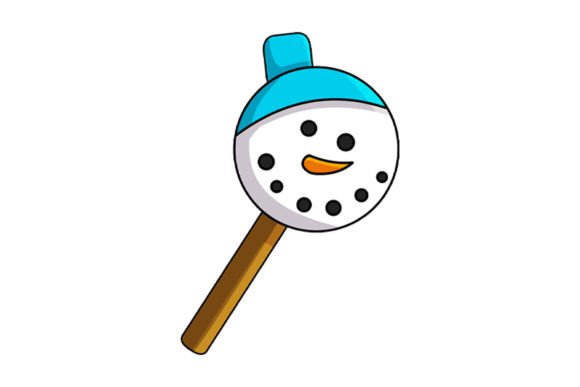
However, I would approach a sweatshirt embroidery project with more caution. Fleece and French terry have a pile that can obscure fine details. If the snowman features tiny elements like coal eyes or a delicate scarf pattern, those might get lost in the fuzz of the fabric. For a custom apparel line, I would recommend sizing the design larger than usual to ensure the thread colors maintain their distinction against the textured background. On a smooth cotton tee or a structured apron, the clarity would be significantly higher, offering a cleaner finished product.
Ideal Substrates and Placement
Not every surface is created equal for this specific style. Here is where I believe this design performs best:
- Pillow Covers: Home decor items often use tighter weave fabrics like linen or cotton duck, which provide an excellent canvas for the nuanced color shifts in the watercolor style.
- Kitchen Towels: A classic holiday gift. The absorbent texture works well with medium-density fills, provided the design isn't placed directly on a seam.
- Baby Embroidery: For onesies or bibs, the soft aesthetic aligns perfectly with nursery themes. However, you must ensure the stitch density is low enough to remain gentle against sensitive skin.
- Embroidered Patch: Creating a patch allows you to control the backing entirely. You can use a twill base that enhances the watercolor look before applying it to a cap or jacket.
Technical Considerations for the Craft Business
If you are an Etsy seller or running a small shop product line, consistency is key to brand trust. Before committing to a large run of commercial embroidery jobs using the Watercolor Christmas Snowman Clipart, you must test. Do not assume the preview image matches the stitch-out. I always advise running a test on scrap fabric that matches your final material. Check how the design behaves on dark fabric versus light fabric. Sometimes, a design relies on the white of the background to create highlights; if you stitch it onto navy blue without proper underlay or background filling, the snowman might look muddy.
Curved surfaces like caps require special attention. The distortion inherent in cap framing can stretch the proportions of the snowman, potentially making him look lopsided. If you plan to offer this as a hat option, verify that the hoop size and digitizing compensation account for the curve. Additionally, watch out for tiny lettering if the design includes text like "Joy" or "Noel." Small details often vanish in watercolor-style digitizing unless they are reinforced with running stitches or simplified.
Maximizing Visual Appeal and Value
The ultimate goal is to create a personalized gift or product that feels premium. The Watercolor Christmas Snowman Clipart adds a layer of artistic sophistication that standard clip art lacks. It signals to the buyer that thought went into the design selection. This elevates the perceived value of your handmade product. Customers are increasingly drawn to items that look like illustrations rather than rigid logos. By leveraging this trend, you enhance buyer engagement and make your printable mockup galleries stand out on social media.
However, professionalism dictates that you verify the licensing terms. Just because a file is available doesn't mean it is cleared for design assets intended for resale. Confirm whether the license covers physical goods, digital files, or both. Nothing damages customer trust faster than legal ambiguity.
Final Verdict for Designers and Makers
The Watercolor Christmas Snowman Clipart is a versatile asset that bridges the gap between traditional illustration and modern textile art. It is not a "set it and forget it" file; it requires a thoughtful approach to fabric selection, stabilizer choice, and stitch parameters. When executed correctly on appropriate materials like tote bags, linens, or smooth apparel, it creates a charming, high-value embroidery project that resonates with the holiday spirit.
My advice? Don't skip the test stitch. Play with your stabilizer options to prevent puckering, especially on stretchy fabrics. Compare the result in black and white to ensure the contrast holds up without color reliance. If you take these precautions, this design can be a cornerstone of your holiday collection, offering a fresh take on seasonal decor that customers will love to give and receive.