Christmas Elk Illustrations for Festive Branding
As a brand designer who has spent the last decade helping local businesses find their visual voice, I approach every new graphic design asset with a critical eye. It is not just about whether an image looks pretty on a screen; it is about how it translates to physical packaging, builds trust with customers, and elevates a small business from "homemade" to "professional." Recently, I evaluated the Christmas Elk collection for a potential seasonal campaign, and the results offered some fascinating insights for boutique owners, food entrepreneurs, and handmade sellers looking to capture the holiday spirit.
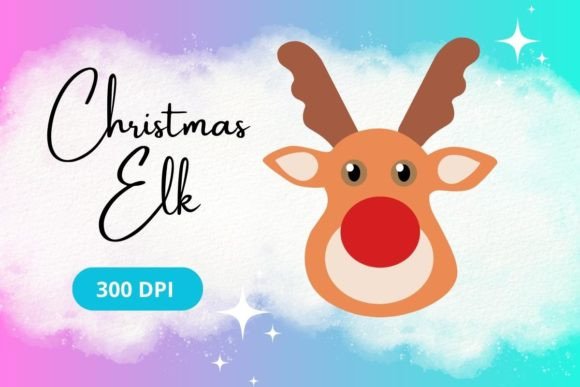
My first impression of the Christmas Elk illustrations was one of warm, rustic charm. Unlike the hyper-polished, glossy vectors often seen in big-box retail advertising, these designs carry a distinct handcrafted quality. They evoke a mood that is both nostalgic and inviting, suggesting a brand personality that values tradition, nature, and authenticity. For a local coffee shop launching a winter blend or a skincare brand releasing a limited-edition holiday set, this aesthetic is gold. It feels organic and friendly rather than corporate or cold. The lines possess a certain softness that pairs beautifully with serif fonts and handwritten scripts, making them ideal for businesses that want to project a sense of care and attention to detail.
Transforming Local Products with Seasonal Identity
In the realm of small business branding, consistency is key, but seasonality offers a chance to play. I envision using the Christmas Elk across a wide spectrum of touchpoints for a hypothetical artisanal candle company. Imagine the primary illustration serving as the hero graphic on a new "Winter Forest" scent label. Placed centrally on a kraft paper sticker, the elk creates an immediate emotional connection, signaling warmth and comfort before the customer even reads the product description.
Beyond the primary product label, these Illustrations are versatile enough to support a full suite of marketing materials. They work exceptionally well on hang tags attached to handmade knitwear or leather goods, adding a festive touch without overwhelming the product itself. For food businesses, such as a bakery selling holiday cookies, the elk can be stamped directly onto packaging boxes or used as a decorative element on menu boards. In a digital context, these assets shine in social media graphics. A carousel post featuring the elk alongside product photography can significantly boost engagement during the crowded holiday shopping season. Furthermore, they are perfect for printable inserts, such as thank-you cards included in online orders, reinforcing the personal touch that defines successful local business interactions.
Elevating Shelf Appeal and Customer Trust
The strategic value of a well-chosen design asset lies in its ability to improve visual hierarchy and product recognition. When a customer walks into a boutique or scrolls through an online marketplace, their brain processes visuals faster than text. The Christmas Elk acts as a visual anchor. By integrating this motif into packaging design, a brand creates a cohesive look that stands out against generic competitors. This consistency leads to stronger brand recall.
Moreover, high-quality illustrations signal professionalism. In the eyes of a consumer, polished marketing visuals often equate to a high-quality product inside the box. Using the Christmas Elk suggests that the business owner cares about the details, which fosters trust. Whether it is used on a website banner or a promotional flyer, the asset helps bridge the gap between a small operation and a established brand. It adds a layer of sophistication that justifies premium pricing, proving that professional branding is accessible even for startups and handmade business owners.
Strategic Placement and Design Considerations
While the Christmas Elk is a powerful tool, it must be used with intention. These illustrations work best when given space to breathe. They are excellent as decorative brand elements on minimalist packaging, where they can serve as the sole focal point. They also excel in product mockup presentations, helping clients visualize the final result before printing. However, caution is required when applying them to very small labels or crowded layouts. If a product package is already dense with ingredient lists, legal disclaimers, or barcodes, adding a detailed elk illustration might create visual clutter, reducing legibility.
Additionally, this specific style may not suit every brand archetype. For luxury minimalist brands that rely on stark typography and negative space, or for formal corporate entities, the whimsical nature of the elk might feel out of place. It is crucial to ensure the decoration does not compete with essential text. The goal is enhancement, not distraction. In editorial design or complex web design projects, the asset should be scaled appropriately to maintain its integrity without dominating the layout.
Practical Notes for Designers and Entrepreneurs
Before committing to any design assets for client work or physical product sales, there are several technical steps I always recommend. First, test the Christmas Elk on real product mockups. View it in black and white to ensure the lines hold up without color, which is vital for cost-effective single-color printing on stickers or tissue paper. Preview the illustration at small sizes to confirm that fine details do not disappear when shrunk down for a hang tag or social media icon.
Typography pairing is another critical factor. I suggest testing the elk beside various font styles: a bold sans-serif for a modern twist, a classic serif for elegance, or a flowing script for a handmade feel. Always check the file formats provided. If you are working with a SVG design or vector file, inspect the editability to ensure you can adjust colors to match your specific brand palette. For raster files, review the PNG design transparency to guarantee clean edges on colored backgrounds. Finally, and most importantly, confirm the commercial license. Ensure you have the rights to use the clipart or illustration for commercial purposes, especially if you are selling physical goods or creating assets for clients. By following these steps, the Christmas Elk becomes more than just a picture; it becomes a cornerstone of a successful, festive brand identity.